
Vision Statement
The vision of the Geography department is aligned with the school vision, which is to aim to be the best Geography department in the country.
Through our students’ learning in our unique subject, we aim to engender active students in their thinking and actions, to appreciate and value our world. We focus on developing empathy and understanding of important issues and a deep sense of global morality. Our Geography students appreciate their own community and can relate local issues to the wider world. We aim to develop confident students with the ability to problem solve and make well informed decisions.
We strongly believe that Geography holds the key to our future and through their study our students are able to explore their sense of place in the world and as a result become more responsible to their local communities and environment in order to build a more sustainable future for all.
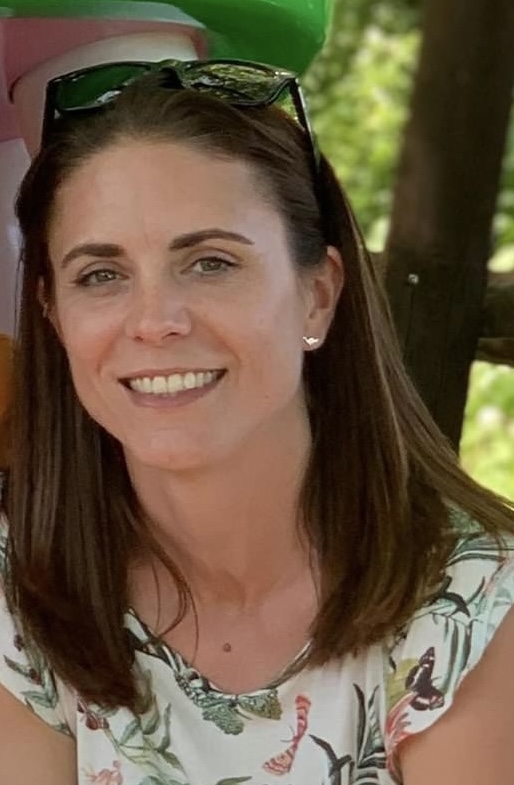
Mrs G Sloggett
Associate Assistant Headteacher / Subject Leader of Geography
The Team
Mr R Strudwick – Teacher of Geography / Head of Year 10
Mr H McDonald-Bowyer – Teacher of Geography
Mr S Bell – Teacher of Geography
Mr M Clarke – Teacher of Geography
Miss E Hughes – Teacher of Geography
Intent
Geography is the subject that supports our students to get to grips with, develop an appreciation for and prepare them for an ever more rapidly changing world. It will enable our learners to make sense of the local and global issues and real life challenges that we face. Geography develops an understanding of human and physical processes within the context of place. It allows our students to recognise the differences in culture, political systems, economics, landscapes and environments across the world and the complex connections between them.
Geography includes the key concepts of place, space and scale, interdependence, physical and human processes, environmental interaction and sustainability and cultural understanding. It covers a myriad of different skills: map skills, graphicacy skills, quantitative and qualitative evidence, statistics, data interpretation and analysis, enquiring and forming an argument, problem solving, decision making and fieldwork.
Geography bridges the gap between science and the arts. It provides a conduit and gives ideas and concepts a real life context. This allows for greater appreciation, understanding and ultimately transforming thinking into action.
Implementation
Our Geography curriculum is planned through key topics that are interconnected around different themes such as space and place. The geography curriculum is often planned to revisit geographical ideas in different contexts and at different scales to build knowledge and understanding through the acquisition of different geographical skills in greater breadth and depth. This is described as a spiral curriculum. Recall of knowledge is promoted by regular low-stakes tests and quizzes and particularly by differentiated questioning.
Students are encouraged to think like a Geographer, speak like a Geographer and write like a Geographer. This is achieved through the promotion of the Geographical Learning Strategies (GLS). This aim of the strategy is to give the students more confidence and support them to develop their understanding and application of their own ideas through metacognition. The outstanding GCSE results we have consistently achieved has been through our well thought out and meticulously planned curriculum, embedding wide ranging geographical skills and content that enrich our students knowledge and understanding of our wider world from year 7 upwards. This is facilitated through our geography learning strategies (GLS)
The main aim has been to create a culture of excellence within the department. The Geography Learning Strategies (GLS) are now embedded into our culture and the aim is that every geography student in the school has a good understanding of the different strategies and how to use them effectively. This further boosts their confidence and develops more trust in the process and will allow our students to use them with greater effect and ultimately improve outcomes. These strategies are simple, differentiated and can be transferred to other subjects. They can be used by all students of all ages and abilities.
Our curriculum planning and implementation allows important concepts such as ‘environment’ and ‘interdependence’, as well as skills, to be reinforced and extended, so that students acquire greater breadth of knowledge, develop the abilities to make sense of more complex situations and relationships, work with more abstract ideas and appreciate more fully others’ attitudes and values
Impact
As a result of the quality of the curriculum and teaching and learning in Geography, we are proud to celebrate that students at Romero’s receive an experience in our subject that is truly first class. Our results over time are illustrated in the table below
| % 4 (standard pass) | % 5 (strong pass) | Progress 8 | Attainment 8 | |
|---|---|---|---|---|
| 2021 | 76% | 56% | N/A | 5.3 |
| 2022 | 88% | 73% | +0.94 | 5.8 |
| 2023 | 82% | 71% | +0.95 | 5.8 |
| 2024 | 82% | 74% | +0.76 | 5.9 |
| 2025 | 83% | 72% | N/A | 5.9 |
| 2026 | 89% | 74% | N/A | 6.1 |
In addition to the outcomes above, we are proud that Geography remains one the most popular option choices at GCSE. We have a dynamic curriculum which is relevant to students and this has inspired and captured imaginations. We aim to make learning relevant, engaging and challenging.
Students are given the opportunity to develop a wide range of statistical and problem solving skills based in a real context. The number of students who continue Geography at A Level is growing and this is a testament to our curriculum development as we develop more confident Geographers who are able to better understand the world and their local communities.
Inspiration
In addition to a challenging and thought-provoking curriculum, we also provide some amazing opportunities to extend our students’ education in Geography. Some examples of this are:
GCSE fieldwork opportunities in the local area:
- Human Geography “Is Brighton Thriving”
- Physical Geography “To what extent are sea defences in Worthing successful?
Geography at A level is an expanding subject, which is rapidly growing as the Sixth form grows into its third year. Our first set of A level results were excellent and a third of our geography cohort have gone on to study geography related degrees at fantastic universities.
- London Stratford: To what extent has the regeneration of Stratford benefited local people?
- West Wittering: To what extent does the sand dune ecosystem follow a pattern of succession?
- Worthing: To what extent does quality of life vary in Worthing?
- Goring: To what extent are sea defences effective in Goring?
Our curriculum has been enriched with an outside speaker from the environment agency
sharing her expertise about the management of the south coast.
We have created a challenging, diverse and relevant curriculum challenging misconceptions and tackling stereotypes. One such example is looking at Africa from different perspectives.
We have created more opportunities for fieldwork at KS3.
In year 7 students investigate microclimates and complete an enquiry in the school grounds
identifying the best place for a herb garden.
Year 8 students are investigating the sustainability of our school through collecting primary
data and then presenting and analysing their data to draw conclusions.
Next year we plan on introducing a new challenging carbon sequencing in year 9 looking into the mitigation of climate change from a local level in our school grounds.
A multitude of enrichment opportunities are within our geography subject area. There are online lectures, visiting specialists, participation in Geography competitions such as the GA WorldWise Competition. Alongside the Via Mundi inter school competition that the department hosts for local secondary schools. Trips such as that visiting Iceland enable students to rally explore their subject beyond the classroom.