Vision Statement
At St Oscar Romero Catholic School, our PE department is committed to delivering an exceptional education for all – through high-quality physical education experiences that empower every student to flourish.
We foster a supportive, inclusive, and respectful community, where respect is shown for self, for others, and for the games we play. Through challenge and competition, students learn resilience – building the ability to bounce back, persevere, and grow with purpose.
Driven by a relentless pursuit of excellence, we encourage all students to push beyond their perceived limits – developing not only physical competence, but confidence, character, and a lasting connection to movement and wellbeing.
In everything we do, we aim to cultivate a culture where every child feels seen, valued, and inspired to thrive – on the field, in the classroom, and in life.
The Team
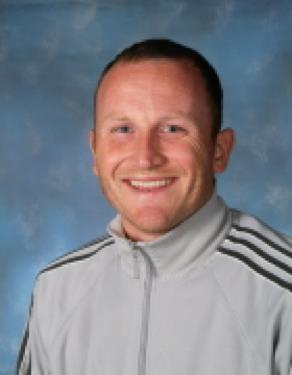
Miss E Hughes – Deputy Subject Leader / Teacher of PE / Head of St Teresa House
Mr S Davies – Teacher of PE / Assistant Headteacher / Head of Year 11
Miss P Standing – Teacher of Dance / Head of Attenborough House
Mr C Leonard – Teacher of PE / Head of Kolbe
Miss I Miller – Teacher of PE
Intent
Developing competence – the ability to access and experience success in any sport or physical activity – sits at the heart of what it means to be physically educated. Experiencing success builds motivation and strengthens long-term engagement. Competence not only enhances access to competition but also shapes healthy, active lifestyles.
In 2021, Hanna Miller (HMI Specialist Lead for PE) outlined three core pillars of competence that underpin all sport and physical activity:
1) Motor competence – Movement must be efficient and safe. Physical education is rooted in physical movement, and teaching movement grounds the subject in the curriculum. Motor competence is developed, not inherited; it requires clear instruction, repeated practice, and meaningful feedback. At Romero’s, our curriculum nurtures motor competence through a wide range of activities, building on fundamental skills introduced in Key Stages 1 and 2 (e.g. running, jumping, throwing, catching).
2) Rules, strategies and tactics – Movement must be informed. Competence involves intelligent movement; students need to understand rules, strategies, and conventions to participate effectively. This cognitive dimension is as critical as physical skill, guiding and refining performance. As with motor competence, this applies across all sports and activities.
3) Healthy participation – Students must learn to participate safely, confidently, and healthily. This pillar encompasses psychological, physiological, and social elements of sport. It empowers students to make informed choices and adopt critical, responsible engagement with physical activity. Olympism values further reinforce this pillar, promoting effort, respect, and ethical participation.
Each curriculum activity contributes to these three pillars. While conceptually distinct, they are functionally intertwined – forming a robust foundation for delivering the national curriculum and cultivating holistic competence.
Implementation
Competence at Romero’s is developed through a broad, balanced, and inclusive PE curriculum. Students experience a wide range of individual (e.g. athletics, badminton, dance, fitness, gymnastics) and team (e.g. basketball, cricket, football, netball, rugby, rounders) sports across Key Stages 3 and 4.
Our schemes of work outline core knowledge and skill development, guiding lesson planning. Lessons are adapted to meet individual needs, with subject leader support for substantial modifications. Key vocabulary and subject knowledge are revisited and reinforced regularly.
Within each activity, students develop competence by exploring:
- The development of skills, techniques and decision making (motor competence);
- How to influence performance and motivate others (motor competence);
- The use of choreography / tactics in response to oppositions actions (rules, strategies and tactics);
- Safety, rules and regulations (rules, strategies and tactics);
- Physical fitness, psychological focus and Olympic values (healthy participation);
- Healthy participation (healthy participation);
Our KS3–4 Core PE assessment framework (1–9 scale) is structured around these six key areas. Students may also submit evidence from external activities (e.g. swimming, martial arts) toward their assessments.
Formative assessment is used throughout lessons; summative assessment is conducted at the end of each unit. A rich programme of extra-curricular clubs and inter-house competitions is open to all. Students also compete at district, county, and national levels.
GCSE PE & OCR Sport Studies
At Key Stage 4, students may opt for formal qualifications in PE and sport. These courses cater to those with a strong interest in deepening their understanding of performance, health, and the wider sporting landscape.
GCSE PE offers a thorough introduction to sport, exercise science, and physical education, exploring how the mind and body interact in performance. Students develop analytical, evaluative, and communication skills to assess their performance and examine social and scientific aspects of sport.
The OCR Cambridge National in Sport Studies provides a vocational route, blending core PE concepts with applied learning. Students investigate contemporary issues in sport – such as ethics, media, participation – and explore career pathways in the industry.
Impact
We aim to equip students with the competence and confidence to sustain physically
active lives beyond school. We also hope their PE experiences shape positive,
lifelong attitudes to health, wellbeing, and movement. Some may even pursue
careers in the sports sector (e.g. coaching, therapy, sport science, teaching,
psychology).
Our GCSE PE and OCR Sport Studies results consistently place us among the top-performing schools nationally:
| % 4 (standard pass) | % 5 (strong pass) | Progress 8 | Attainment 8 | |
| 2018 | 76% | 36% | -0.71 | 4.0 |
| 2019 | 100% | 100% | +1.54 | 6.7 |
| 2020 | 100% | 87% | +1.39 | 6.3 |
| 2021 | 96% | 57% | +0.39 | 5.1 |
| 2022 | 97% | 90% | +1.03 | 6.3 |
| 2023 | 100% | 100% | +1.46 | 7.2 |
Inspiration
Students benefit from high-quality experiences that connect them to further and higher education institutions (e.g. sixth form colleges, universities, elite performance development centres). These opportunities allow them to engage with industry experts, enriching their understanding of potential career pathways in sport.
We actively promote progression to high-performing institutions – both locally and nationally – and support advanced performers through elite development pathways. Our department regularly enters regional and national competitions, with recent success in football, rugby, swimming, dance, cricket, table tennis, basketball, rounders, stoolball, and athletics.
As a department, we embody the seventh ‘Pillar of Possibility’: the ability to bounce back. The capacity to recover quickly from setbacks is vital – not only in sport, but in all areas of life. We embed this pillar in every lesson, fostering resilience through individual and collective challenges.
Connecting PE to Real-World Sport & Careers
Some students view PE as just another subject on the timetable. To inspire, we need to help students see PE as a launchpad into real-world opportunities – both in sport and beyond.
We provide meaningful engagement with the sports industry and elite performers. Guest speakers – coordinated by Mr Dean (Extended Learning Leader) – including professional athletes and coaches, regularly share their expertise. Trips to live sporting events, such as National League Cricket fixtures and Wimbledon, offer students first-hand insight into elite-level sport.
To support continued participation beyond school, we build partnerships with local clubs and coaches. The “Festival of Sport” at Chichester University introduces students to university pathways, apprenticeships, and careers in the sports industry. We also inspire students through real-world physical challenges. Taking part in charity events like Swimathon, ParkRun, The Romero Run, or Tough Mudder promotes a sense of purpose, community spirit, and personal achievement.
Making PE Engaging & Student-Led
PE at Romero’s is dynamic, inclusive, and student-driven – empowering students to lead, explore, and thrive. We embrace alternative and inclusive sports to ensure every student feels represented and involved. Activities such as ultimate frisbee, boccia, parkour, dodgeball, and spikeball bring variety and excitement to the curriculum. Adaptive PE sessions ensure that students with additional needs are fully included.
To inspire, we listen to student voice – learners regularly discuss preferences and activity ideas with the PE department. Cross-curricular links spark innovation in lessons, such as exploring biomechanics through sports science or applying nutritional knowledge in practical contexts. Peer coaching and leadership opportunities are embedded in every unit. Students lead warm-ups, guide drills, and contribute to tactical discussions. Older students also act as mentors to younger pupils, helping to build skills, confidence, and collaboration across year groups.
Enrichment, Inspiration & Passion for Physical Activity
PE should not be limited to meeting targets – it should spark joy and inspire a
lifelong connection to movement and wellbeing. School-wide events foster a vibrant sporting culture. House competitions engage students of all abilities, while mass-participation events – such as fun runs and staff vs. student matches – create unforgettable shared experiences. Outdoor adventure and experiential learning build resilience, independence, and
team spirit. Students take part in Duke of Edinburgh expeditions, climbing, skiing, and water-based challenges that push them out of their comfort zones. Enrichment activities like raft-building, high ropes, and survival skills also enhance teamwork and problem-solving.
To promote active lifestyles beyond the classroom, we recognise and reward students for independent activity – including club sport, personal fitness challenges, and gym attendance. We also offer lifestyle-focused PE opportunities exploring yoga, strength training, and mindfulness. Active break-time spaces, equipped with table tennis tables, basketball hoops, and open-play zones, encourage movement throughout the school day.
Celebrating Every Student’s Success
To inspire is to ensure that every student – not just the most naturally gifted – feels seen, valued, and motivated to continue their journey in sport. We celebrate a wide range of strengths. Awards are given for effort, progress, leadership, and sportsmanship, not just high-level performance. Olympic Value Awards recognise students who consistently support others or demonstrate exceptional resilience. Success stories of students continuing in sport beyond school are regularly shared to inspire others.
Student achievement is proudly showcased. Our PE “Hall of Fame” highlights personal bests, team victories, and out-of-school accomplishments. Sporting contributions are celebrated via school social media and newsletters. Our annual Sports Presentation Evening brings the school community together to honour students’ sporting journeys.
We empower students to lead and inspire others. “PE Ambassadors” champion sports participation, mentor younger pupils, and promote inclusive opportunities for all. These leadership roles build confidence and reinforce the value of physical activity as a shared, positive experience.
By embedding inspiration into every aspect of our PE curriculum, we ensure that students leave school with more than just physical skills. They develop a lifelong love for movement, the confidence to remain active, and the resilience and ambition to challenge themselves – physically, mentally, and socially.
More than anything, we aim to transform PE from something students have to do into something they want to do – for life.
Curriculum Roadmap